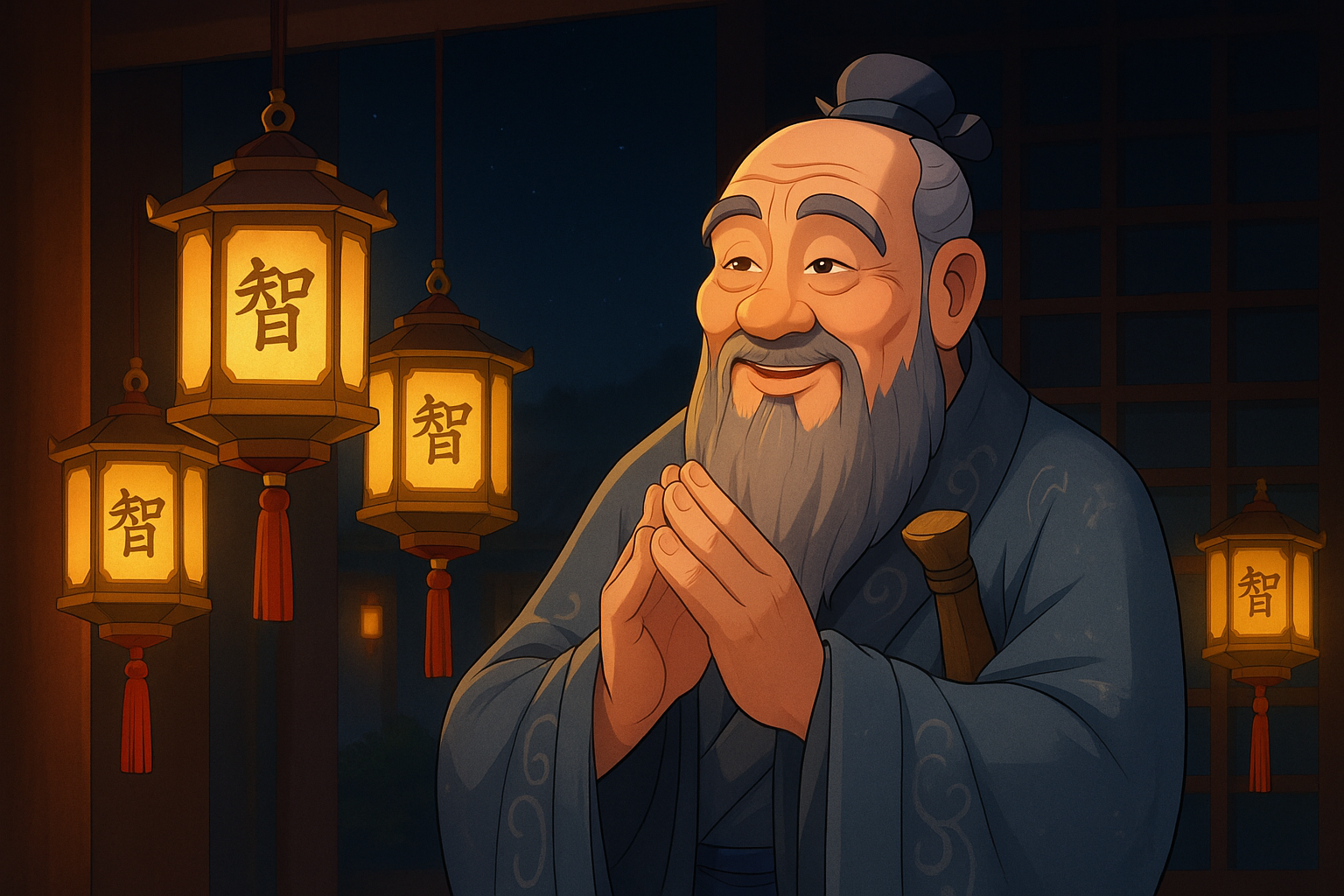
Over 2,500 years ago, in the small state of Lu in ancient China (modern-day Qufu, Shandong Province), a child was born into modest circumstances. His name was Kong Qiu, later known to the world as Kong Fuzi — Confucius.
His father, a warrior, died when he was young; his mother, gentle and devout, raised him alone. Poverty never dimmed his mind. As a boy, Confucius loved learning — studying history, poetry, and ritual. He sought not wealth, but wisdom.
“Education breeds confidence. Confidence breeds hope. Hope breeds peace.”
The Seeker of Order
China, in his time, was fragmented — states at war, rulers ambitious, people weary. Confucius looked upon the chaos and asked: How does one build a world that lasts?
His answer was neither through conquest nor fear, but through virtue.
He believed harmony could return if rulers were just, if parents were kind, if children were respectful, if words matched deeds. His philosophy, simple yet eternal, was built on Ren (benevolence), Li (proper conduct), and Yi (righteousness).
“The strength of a nation derives from the integrity of the home.”
The Wanderer
In his middle years, Confucius served as an advisor in the court of Lu, where his reforms brought honesty and peace. But politics, fickle as ever, turned against him.
He left his homeland and wandered for thirteen years across China — traveling from court to court, teaching kings and peasants alike. Many dismissed him; some mocked him. Yet he kept walking, teaching wherever he could, gathering disciples who would carry his words into eternity.
“It does not matter how slowly you go, so long as you do not stop.”
The Teacher
Confucius never sought to be worshipped. He sought to awaken.
He opened one of the world’s first schools, welcoming all who wished to learn — rich or poor. He taught through conversation, through parable, through example. For him, education was not about memorization but transformation — a way to cultivate virtue, not vanity.
“By three methods we may learn wisdom: first, by reflection, which is noblest; second, by imitation, which is easiest; and third, by experience, which is bitterest.”
The Master and His Disciples
Confucius’s students — like Yan Hui, Zilu, and Zengzi — preserved his dialogues and sayings, which became the Analects (Lunyu), one of the most influential books in human history.
Within its pages, he spoke not of gods and heavens, but of humanity — urging people to act with empathy, respect, and balance.
“The superior man seeks what is right; the inferior man seeks what is profitable.”
He taught that a true leader rules not by power, but by moral example — that greatness begins within.
The Final Years
Confucius died in 479 BCE, aged 72, surrounded by a few loyal disciples. He had never ruled a kingdom, never commanded an army, and never gained wealth. Yet centuries later, his words would rule empires.
Dynasties rose and fell, but Confucius endured — his ideas shaping the moral spine of China and influencing civilizations across the world.
“To see what is right and not do it is the want of courage.”
The Eternal Teacher
Confucius did not write scriptures — he wrote life itself. His temple in Qufu still stands, not as a monument of power, but of peace. Scholars bow before his statue not to worship him, but to thank him — for teaching humanity how to live with virtue and grace.
“He who conquers himself is the mightiest warrior.”